
Here at Midnight Video (my basement), we’ve got a hefty section devoted to the output of the UK’s Hammer Films, namely the classic incarnation that evolved out of the ashes of the 1930’s-40’s Exclusive Films to become a production company synonymous with the well-produced, intelligently-scripted, and envelope-pushing “Hammer horror” of the 1950’s-1970’s. (They had a healthy output of other genres as well, of course, from comedies to Hitchcockian thrillers to adventure films to prehistoric fantasy. Whatever did well, they made more of it.) For newcomers, here are ten films that are essential entry-points to Hammer Horror.
- THE QUATERMASS XPERIMENT (1955)
Hammer Horror began to take shape not through Gothic horror but science fiction, with Professor Quatermass confronting an extraterrestrial infestation. Quatermass was introduced in writer Nigel Kneale’s 6-part 1953 TV series THE QUATERMASS EXPERIMENT and adapted by Hammer into this prickly little 1955 movie, with the title’s emphasis on the “X” winking at the film’s (absurd) X-rating. Controversially, Hammer cast an American in the part, the noir staple Brian Donlevy, who plays the professor as a short-tempered and almost militaristic taskmaster. (Reginald Tate played Quatermass in the original series.) But despite Donlevy’s gruff manner, the film succeeds as a thinking man’s SF horror film. Director Val Guest emphasizes logical procedure and deduction on its collision course with the horrific transformation of an astronaut (an excellent Richard Wordsworth, the suffering all over his wracked, gaunt features) into a Westminster Abbey-filling blob. Arguably better is the sequel, QUATERMASS II, which brings back Donlevy and delivers a more ambitious alien invasion plot, though the third in the series, 1967’s QUATERMASS AND THE PIT (starring Andrew Keir), is the finest of them all, and deeply influential. X THE UNKNOWN (1956), though not tied to the series, nonetheless feels like an unofficial entry, as scientists try to stop a creeping radioactive mass.
2. THE CURSE OF FRANKENSTEIN (1957)
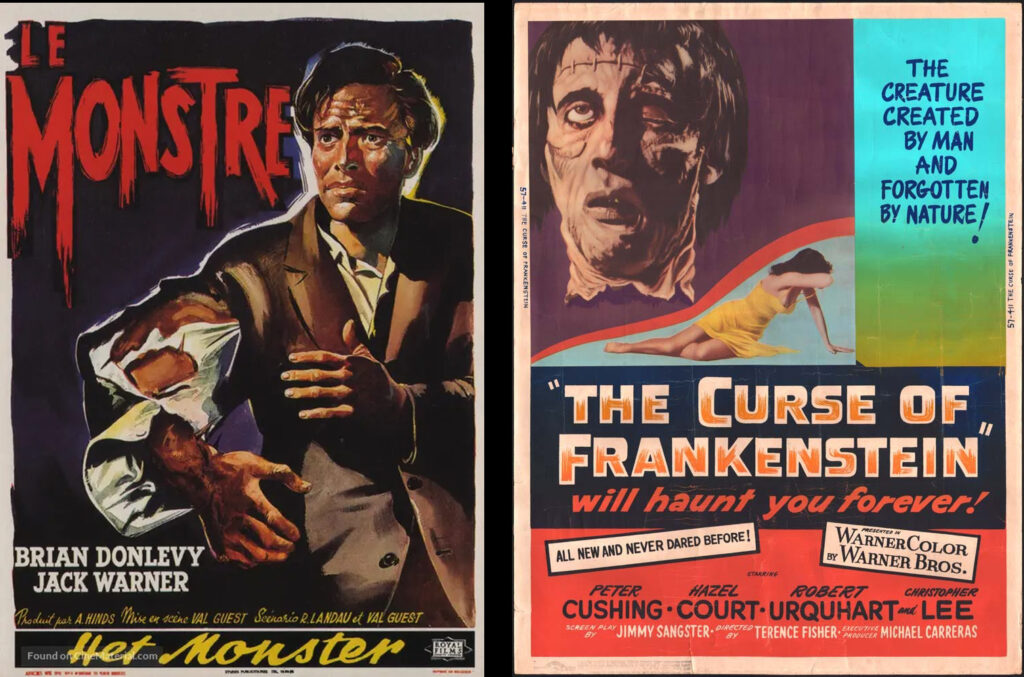
And here we meet Baron Victor Frankenstein, one of the iconic characters of Hammer Horror, as embodied by Peter Cushing, one of its greatest faces. (And that face is handsome, drawn, aloof, devious.) Mary Shelley’s monster, deliberately bearing no resemblance to the Universal character but considerably more grotesque, is played by Christopher Lee, who will quickly join Cushing as a marquee, and macabre, Hammer star. That the film was in color was significant; horror wasn’t usually considered prestigious enough for color. That meant the blood and gore are very red. Also significant: Baron Frankenstein is not sympathetic in the slightest, but someone who uses his considerable intelligence to get exactly what he wants while brushing off those he considers to be his intellectual inferiors. His friendship with his assistant, Paul (Robert Urquhart), forms the heart of director Terence Fisher’s compelling re-imagining, successfully wresting the story out of the grips of Universal Studios and into a completely different world. Hazel Court (THE PREMATURE BURIAL, THE MASQUE OF THE RED DEATH) provides the “Hammer Glamour” in this one. A host of delightful and varied sequels followed, with the Baron (not any single monster) as the recurring character; the very next one, 1958’s THE REVENGE OF FRANKENSTEIN, is one of the best.
3. THE ABOMINABLE SNOWMAN (1957)
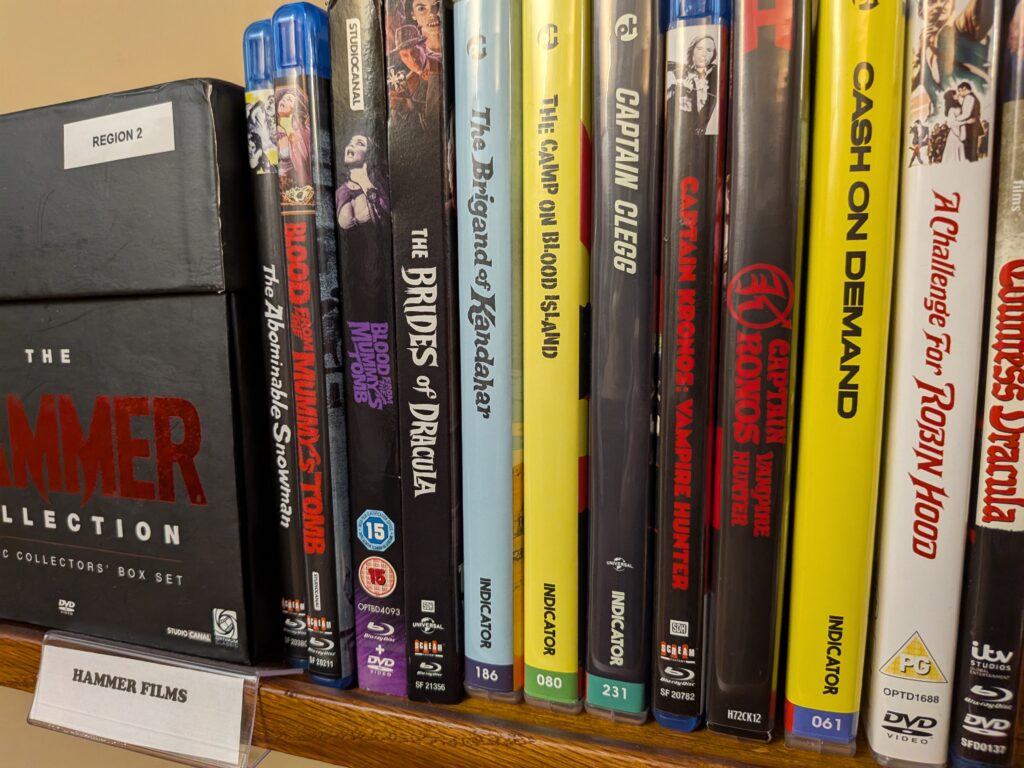
Nigel Kneale contributed the excellent script for this Val Guest film, which is, to date, the definitive Yeti movie. Hammer effectively conjures a journey to the Himalayas, with mountain vistas interrupted by harrowing natural dangers and human conflict, as well as the shadowy creatures hiding in remote, snowbound climes. Cushing brings his charisma, facing off against Forrest Tucker as a gruff American opportunist. What makes this film so special is Kneale’s treatment of the mysterious creatures (which are never seen fully) as a species with telepathic powers – a species that expresses more wisdom than those who go seeking them.
4. DRACULA (1958)
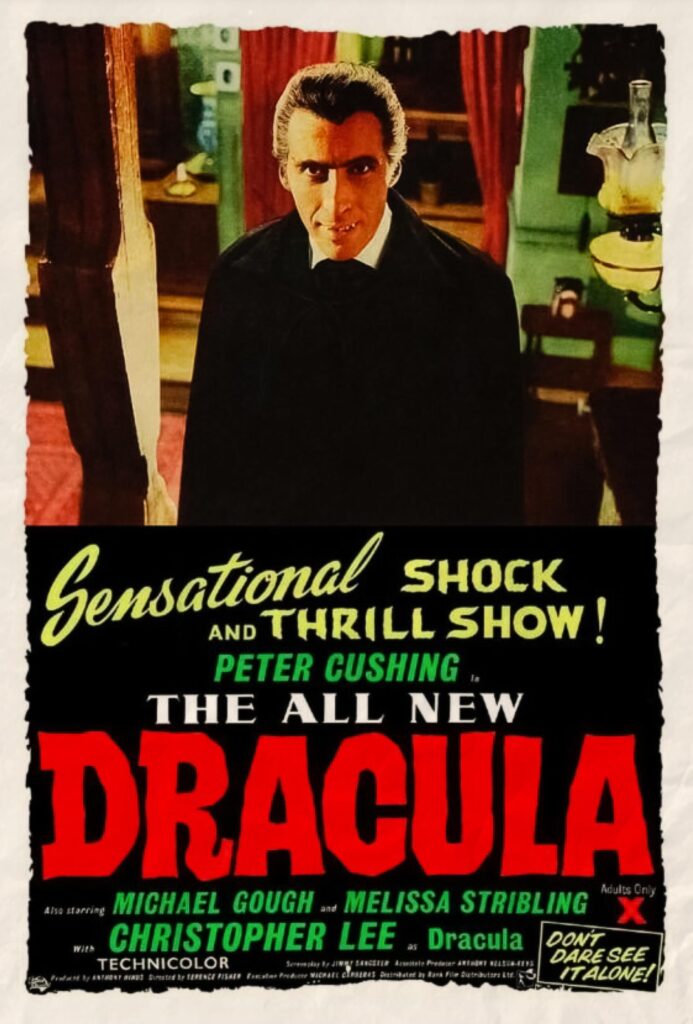
Considered by most fans to be the pinnacle of Hammer Horror, DRACULA (distributed in the U.S. as HORROR OF DRACULA, to avoid confusion with any Legosi re-release) is certainly the most iconic. Lee gets a more glamorous role this time, as his Count Dracula emphasizes sex appeal over supernatural powers. (The foreigner is coming for your women.) Cushing cuts a more heroic figure than his Baron Frankenstein; as Van Helsing, he’s so good in the role that the next film in the series, BRIDES OF DRACULA, left the title character in the grave so Cushing could battle a new vampire. Terence Fisher’s direction is a master class of dynamic staging, suggestion, and suspense, and James Bernard delivers one of his many lushly orchestrated scores, along with a bombastic and memorable title theme. Jimmy Sangster’s script is clever and efficient, even if he does collapse the novel a little too efficiently for my taste. No matter – scraps of the rest of the book turn up in its many, many sequels.
5. THE MUMMY (1959)
Really the third in a trilogy begun with THE CURSE OF FRANKENSTEIN and DRACULA, THE MUMMY reunites Peter Cushing (as the hero), Christopher Lee (the monster), director Terence Fisher, and screenwriter Jimmy Sangster. And in many ways, it’s the most conventional of the three, bearing the closest resemblance to the Universal Studios formula, drawing heavily from the original 30’s-40’s run of mummy movies. All the stock elements are here: there’s a prolonged Ancient Egypt flashback, a curse, a revenge scheme, a staggering, unstoppable mummy, and reincarnated souls. It’s everything you want in a mummy movie (unless your tastes go the Brendan Fraser direction).
6. THE CURSE OF THE WEREWOLF (1961)
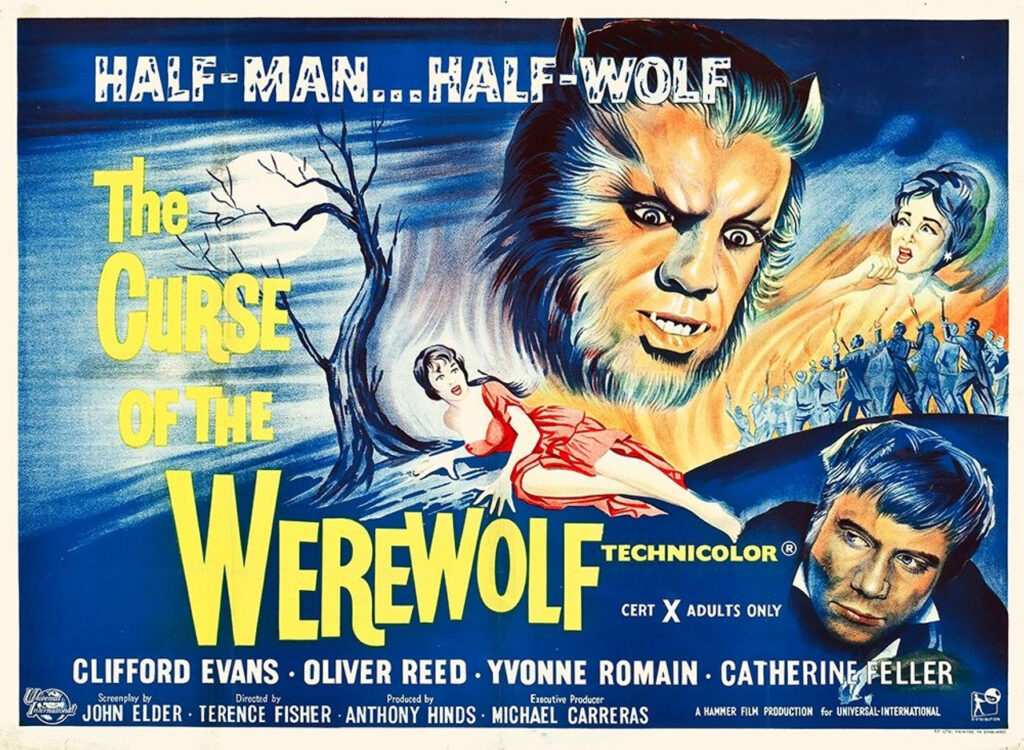
Surprisingly the only werewolf movie that Hammer ever made – presumably to check a box – THE CURSE OF THE WEREWOLF was also a launchpad for their latest star, Oliver Reed. Reed’s approach was very different from Cushing’s and Lee’s: his characters for Hammer were handsome but radiated a barely-contained fury, a psychological, sometimes sociopathic crucible. He played a twisted teddy boy in Joseph Losey’s THE DAMNED (1963) and a deranged psycho in PARANOIAC the same year. Here, he’s a more sympathetic figure, a young Spaniard struggling with a heritage that’s about to tear his life apart. It’s not his fault that he has devilish origins (recounted in a remarkably sadistic prologue) that mark him as a lycanthrope, and so, as with the best werewolf movies, we watch in horror as the curse takes hold and a promising life is shredded to pieces. Fisher again directs, and the superior score is by Benjamin Frankel.
7. TASTE OF FEAR (1961)
Parallel to all the monster movies, Hammer gave Jimmy Sangster a side-career in penning twisty DIABOLIQUE-style thrillers. The best of them is TASTE OF FEAR (American title: SCREAM OF FEAR), which I first saw in a revival theater in the early 2000’s on an irresistible double-feature with THE REVENGE OF FRANKENSTEIN. Now I have a collection of lobby cards and an original poster on display in Midnight Video, and it’s become a perennial favorite. Susan Strasberg plays a wheelchair-bound young woman who keeps seeing visions of her dead father, even though he’s not supposed to be dead. Did someone kill him? Or is someone trying to drive her insane? Director Seth Holt maintains a suffocating tension right up to its genuinely surprising – and satisfying – finale. Other excellent thrillers in this vein from Hammer include THE SNORKEL (1958) and Holt’s THE NANNY (1965).
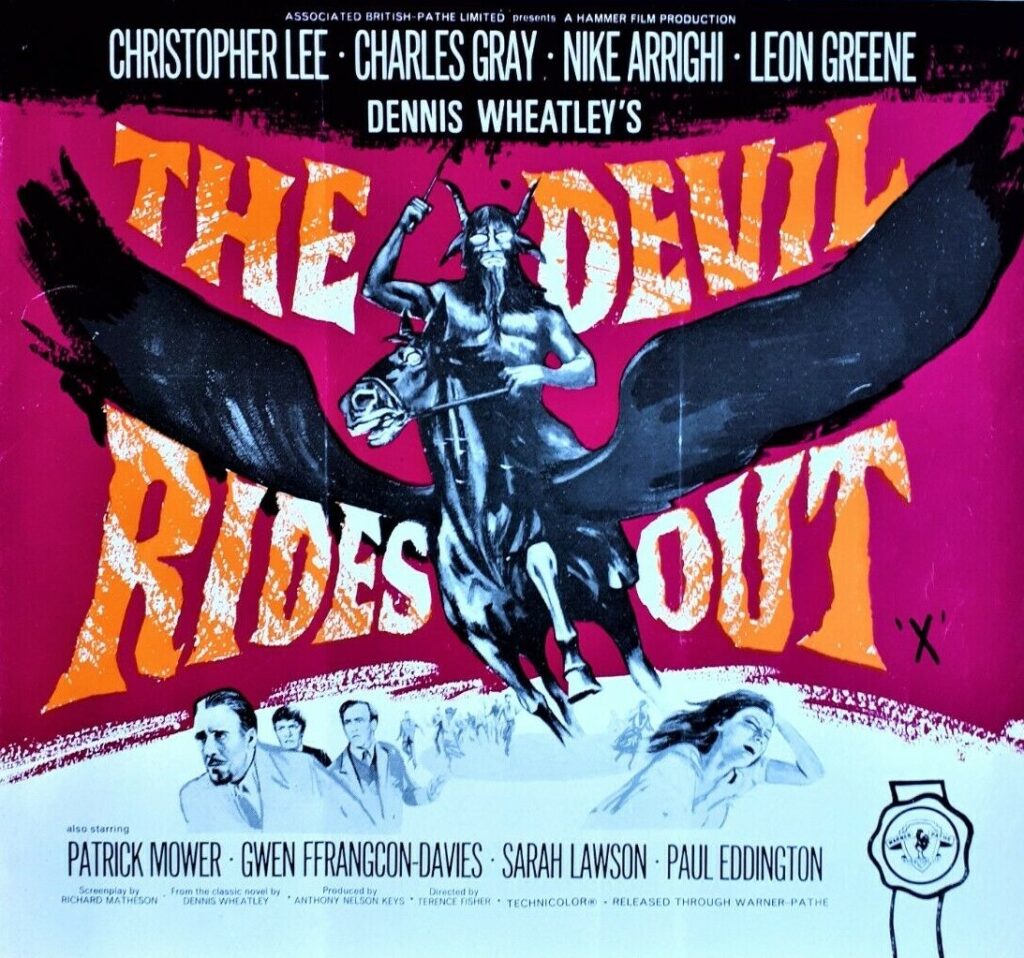
8. THE DEVIL RIDES OUT (1968)
In 1968 Hammer began adapting works by the prolific author Dennis Wheatley to the big screen, including the campy THE LOST CONTINENT and, at the far opposite end of the spectrum, THE DEVIL RIDES OUT, one of the best films Hammer ever made (I’d argue the very best). Part of a series of occult thrillers by Wheatley steeped in his own knowledge of, and reportedly direct experience with, Satanism, they feature recurring characters including the Duke de Richleau, a Van Helsing-like opponent of all things evil. In the film, a triumph for director Terence Fisher, de Richleau is played by Christopher Lee, a friend of Wheatley’s, in a rare heroic role (it would be easy to imagine Cushing in the part, but by contrast it’s much more interesting to see Lee in it). Charles Gray, now best known for his small role as the Criminologist in THE ROCKY HORROR PICTURE SHOW, almost walks away with the film as the Satanist Mocata, whose powers include hypnotism (demonstrated in the film’s best scene) and the conjuring of “the Goat of Mendes – the Devil himself!”
9. TASTE THE BLOOD OF DRACULA (1970)
The 60’s and 70’s saw Hammer creating franchises out of the Frankenstein and Dracula characters – Cushing carrying the torch for the former series, Lee (often begrudgingly) for the latter. A highlight of the latter series almost didn’t feature Dracula at all. When it looked like Lee might not return, a script was written to accommodate his absence, substituting a new character played by Ralph Bates. But Lee did return, and so, almost halfway through TASTE THE BLOOD OF DRACULA, Bates dies and the Count is resurrected – mute, specter-like, to take revenge on the hypocritical elders of a village, turning their own teenage children against them. Yes, it’s a counterculture movie in its own way: and far more successful than so many 60’s and early 70’s attempts to capture the hippie movement by being a period film. (DRACULA A.D. 1972, which tried to be youthful and hip, is a bit embarrassing for that very reason.) Linda Hayden co-stars, turning the stake against her own parents, in a dry run for her more famous youth-in-horrific-revolt film, THE BLOOD ON SATAN’S CLAW (1971). Anyway, out of a potentially disastrous production came a Hammer mini-classic.
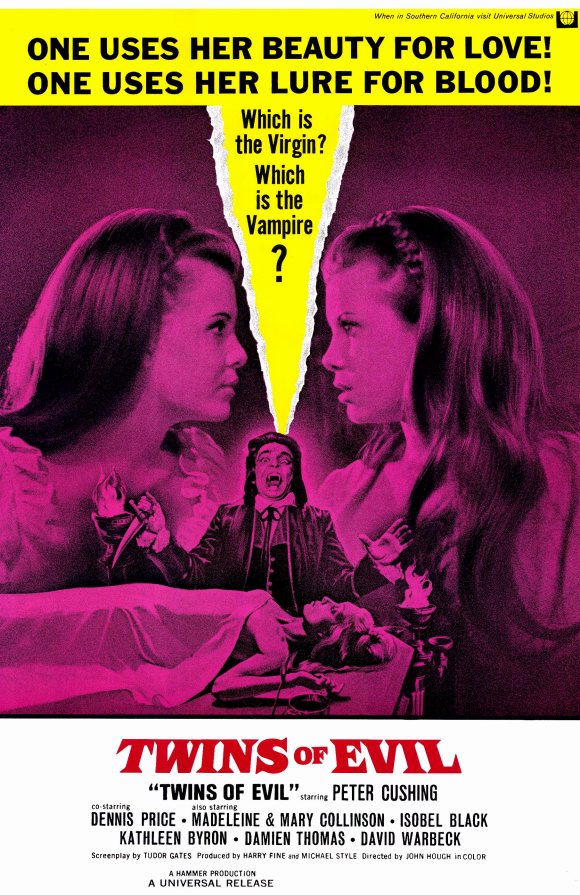
10. TWINS OF EVIL (1971)
At the dawn of the 70’s and the loosening of censorship (and the strict guidelines by the BBFC), Hammer began dabbling in more explicit sex, though nowhere near as explicit as what was being imported from other countries. You might better characterize their efforts as peek-a-boo nudity and extra buckets of blood. Foremost among those films was THE VAMPIRE LOVERS (1970), a “Carmilla” adaptation starring their newest starlets, Ingrid Pitt and future Bond girl Madeleine Smith. Lesbianism no longer needed to be hinted at, and neither did what was under the corsets. What followed were two more films in an informal “Karnstein Trilogy,” the best of which (and the most fondly remembered) is TWINS OF EVIL. The twin Playboy Playmates Mary and Madeleine Collinson play Maria and Frieda Gellhorn, one of whom falls prey to a vampire, Count Karnstein (Dennis Price), and leading to the immortal poster tagline: “Which is the virgin? Which is the vampire?” Apart from the erotic aspects, what makes the film a standout is the ferocious performance by Peter Cushing as a religious zealot, one the most committed performances in his career.
Leave a Reply