
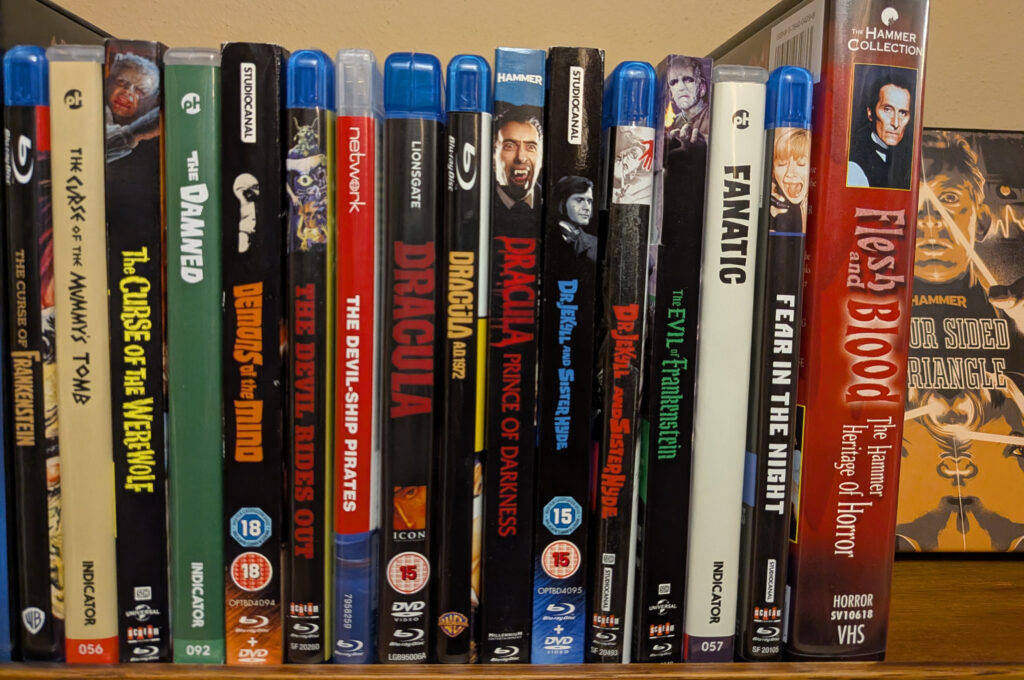
My previous post focused on ten films that everyone new to Hammer horror should know. (I cheated a bit, strongly recommending other essential Hammers without assigning them slots, because to pick ten is never enough.) So to allow some breathing room, if you consider that post a starting point for Hammer, what follows are ten other films from the production company’s heyday, limited only by the “horror” label. That is, for a broader appreciation of the studio, you’d want to check out their prehistoric saga ONE MILLION YEARS B.C. (1966) with stop-motion effects by Ray Harryhausen and a starring role for Raquel Welch, which launched a mini-saga of other “fur bikini” movies from the studio. You’d also want to check out SHE (1965), their other big-budget fantasy adventure spectacle, starring Ursula Andress, Peter Cushing, Christopher Lee, Bernard Cribbins, and John Richardson. They also made a number of comedies, war movies (notably 1959’s superb YESTERDAY’S ENEMY), and swashbucklers. But Dracula, Frankenstein, and other Gothic ghouls remained their most consistent source of income, at least until the early 70’s when it became more challenging to find lucrative U.S. distribution deals, and as the horror competition became edgier at the drive-ins.
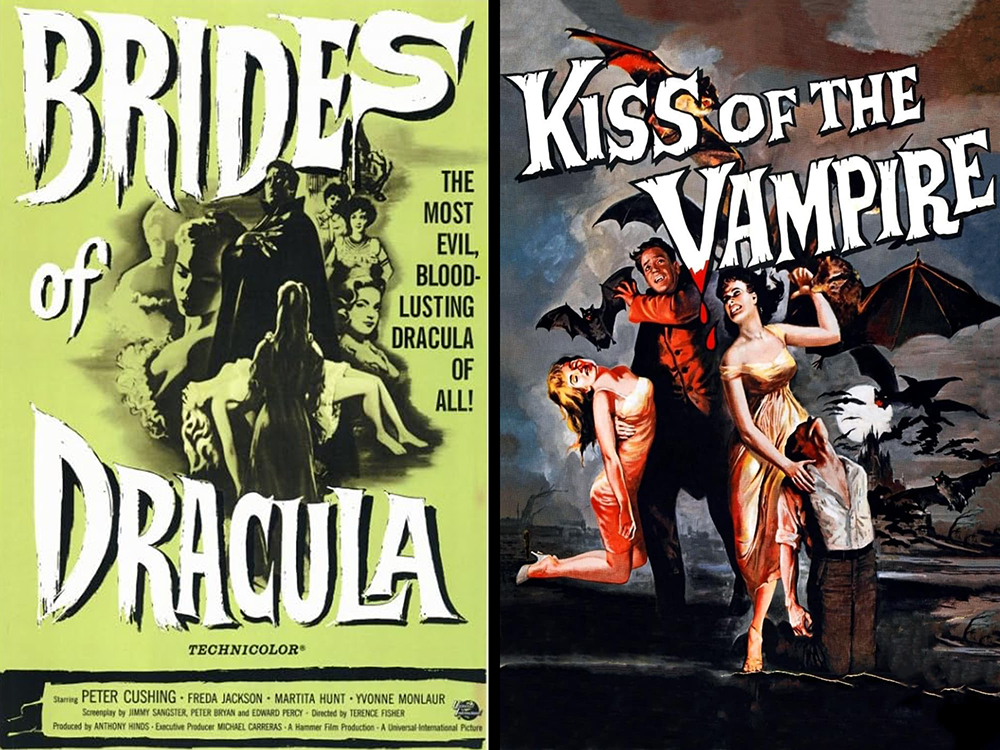
1. BRIDES OF DRACULA (1960)
A sin of an exclusion from my previous list, so I’m including it hear to atone; it really is classic Hammer horror distilled into 85 minutes. And I just love the idea that the series might have followed not Dracula but his nemesis, the survivor of the first movie, Van Helsing (Peter Cushing). But Cushing, tirelessly employed, would soon be removed from here and into the Frankenstein series, not returning to face Dracula until the early 70’s. The villain is Baron Meinster (David Peel), freed by an unwitting young woman from his castle imprisonment, whereupon he unleashes a vampire plague in the neighboring village. In one of the film’s most harrowing scenes, Van Helsing is bitten by a vampire, and frantically takes steps to remove the curse. The finale, involving a windmill, is one of the most iconic in Hammer’s filmography, and their go-to director for luscious Gothic, Terence Fisher, is in top form with this outing.
2. KISS OF THE VAMPIRE (1963)
Australian director Don Sharp joined the Hammer stable with this chilling little movie about a cult of vampires that slowly ensnares a group of travelers. An obvious influence on Roman Polanski’s DANCE OF THE VAMPIRES (aka THE FEARLESS VAMPIRE KILLERS, 1967), the plot also foreshadows Dracula’s official return in fan-favorite DRACULA, PRINCE OF DARKNESS (1966). This is a sumptuous slow-burn of a vampire movie, with just the right notes of debauchery and corruption, and featuring an elegant score by James Bernard and a sophisticated script by “John Elder” (the pseudonym of Anthony Hinds).
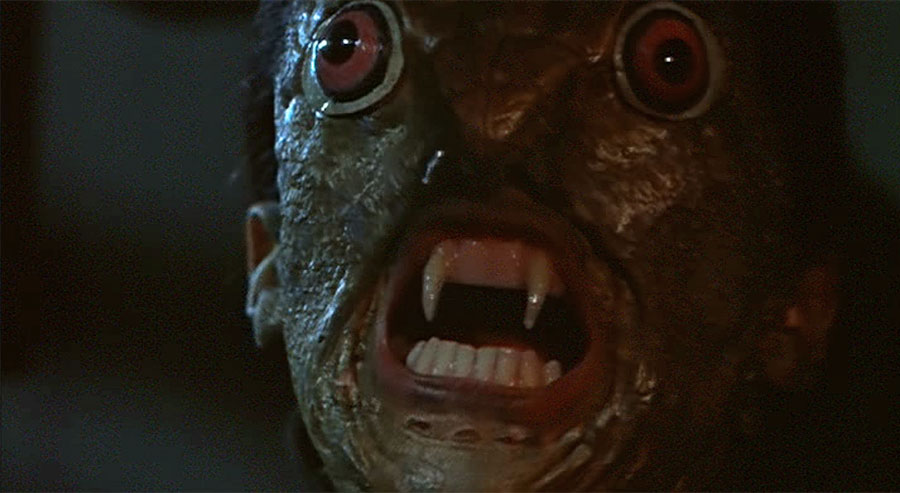
3. THE REPTILE (1966)
I should mention I’m skipping past some very notable Hammer horrors. THE TWO FACES OF DR. JEKYLL (1960) is a clever twist on Robert Louis Stevenson’s tale by making Jekyll (Paul Massie) attractive rather than (physically) monstrous, and it features Christopher Lee in one of his best roles for Hammer, but there’s something dissolute about the film, and a promising set-up eventually fizzles out. Terence Fisher got his shot at THE PHANTOM OF THE OPERA (1962), but the changes to the original story are a little baffling and anticlimactic, despite the film’s higher than usual production values; it’s worth seeing, but not the film it might have been (Herbert Lom is reliably strong as the Phantom). Fisher’s THE GORGON (1964), with its sophisticated storyline, may take a few viewings to properly appreciate, but it is very good – if perhaps understated to a fault, and with a monster that ought to look just a bit more convincing; nonetheless, Lee and Cushing are excellent in it. If I dash ahead to THE REPTILE, which some might call a more minor Hammer effort, it’s only because whenever I pop it in, I have a lot of fun with it. The locals in a small village are dying of venomous bites, apparently the work of a creature that’s half-human, half-reptile. The makeup isn’t terribly convincing, but director John Gilling (THE SHADOW OF THE CAT, THE PIRATES OF BLOOD RIVER) keeps it in the shadows for as long as he can. Anthony Hinds is once again the screenwriter, and by this point he could write this kind of story in his sleep – but even if you call this a cookie-cutter Hammer monster movie, it’s a delight anyway.
4. THE PLAGUE OF THE ZOMBIES (1966)
The same year, Gilling brought us Hammer’s only zombie movie, ahead of NIGHT OF THE LIVING DEAD by two years. These zombies, of course, follow the more traditional model: slave labor animated by Haitian voodoo, not the cannibalistic hordes that Romero invented. The lead role, investigating a mystery in another haunted village, belongs to André Morell, who played Watson in Hammer’s excellent HOUND OF THE BASKERVILLES (1959) and was Nigel Kneale’s first choice to play Professor Quatermass on television (though he didn’t do so until the small screen’s QUATERMASS AND THE PIT, later efficiently adapted by Hammer). A strange plague is affecting the townspeople, and Morell traces it back to an old mine, uncovering a voodoo plot with undertones of colonialism. Gilling stages some memorable shock scenes.
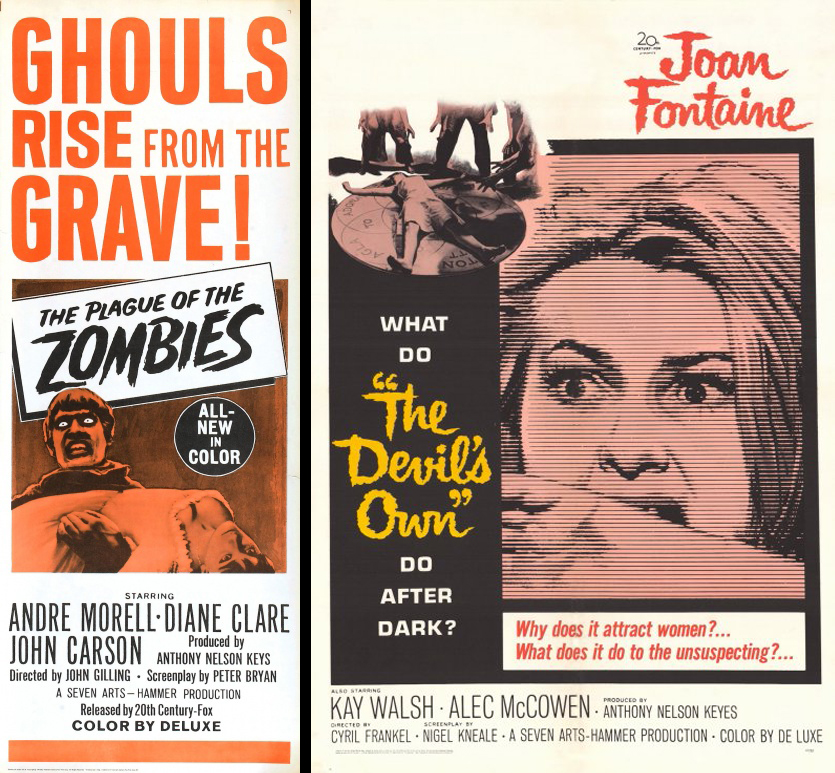
5. THE WITCHES (1966)
Nigel Kneale wrote the screenplay for this influential folk horror film, adapted from the novel THE DEVIL’S OWN (also the US title of this film) by Norah Lofts. Joan Fontaine of REBECCA fame plays a schoolteacher who discovers something amiss in another of Hammer’s quietly sinister villages. Her paranoia and mounting suspicion about her neighbors effectively foreshadow ROSEMARY’S BABY, the slick and explicit blockbuster that would mark a turning-point in horror and arguably leave Hammer struggling to keep pace.
6. FRANKENSTEIN CREATED WOMAN (1967)
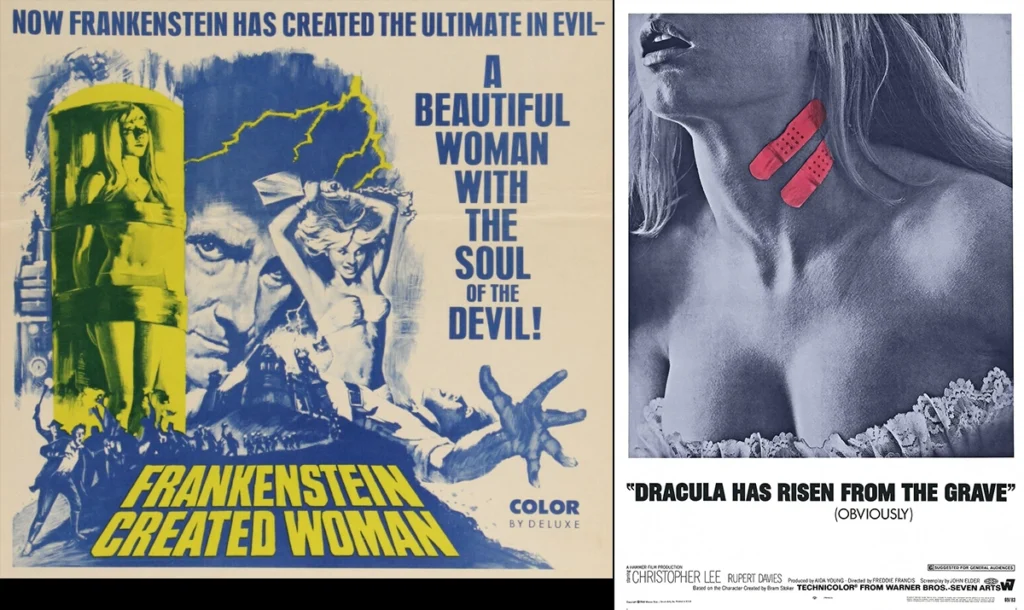
Meanwhile, Cushing’s Baron Frankenstein was sorting through one disastrous experiment after another in his quest to pursue eternal life through the bodies of corpses. Following THE REVENGE OF FRANKENSTEIN (1959) and THE EVIL OF FRANKENSTEIN (1964), the latter borrowing more heavily from Universal Studios’ iteration of the monster, FRANKENSTEIN CREATED WOMAN got creative, with a psychologically rich plotline involving the Baron transferring the soul (this one also gets metaphysical) of Frankenstein’s deceased assistant Hans into the recently drowned body of an innkeeper’s daughter, who also happens to be Hans’s lover (Susan Denberg). Despite Frankenstein’s attempts to create a new being, his subjects’ past becomes inescapable, and his creation gets loose, leading to a trail of fresh bodies. Despite the exploitative title, this is the most haunting and somber of the Frankenstein series, and a major highlight.
7. DRACULA HAS RISEN FROM THE GRAVE (1968)
For this list, many would choose, over this film, DRACULA, PRINCE OF DARKNESS (1966), which first resurrected Lee’s Count, but as enjoyable as that film is, it feels like a prologue: Dracula returns, but he doesn’t get to do much else (of course, he’s promptly vanquished, too). DRACULA HAS RISEN FROM THE GRAVE picks up where that film left off and wastes no time about it. Granted, Lee still doesn’t get that much to do in yet another simplistic plot (it’s astonishing, really, how nobody at Hammer could quite figure that problem out, film after film), but come to this movie for the surface pleasures. Apart from Lee’s formidable presence, there’s cinematographer-turned-director Freddie Francis’s captivating visual storytelling, which transforms this Dracula installment into something like a Grimm’s fairy tale (with extra touches of the sensual). I also love the set of rooftops built for the film, over which the characters sneak for their illicit late-night visits, and the impressionistic use of color filters.
8. VAMPIRE CIRCUS (1972)
When I was in college, in the pre-streaming era, I seek out new video stores just to see what Hammer movies they had, trying to chase down those titles I’d not yet seen. Particularly elusive was VAMPIRE CIRCUS. At one point, I found a hole-in-the-wall video store in Milwaukee crammed with rare horror films. I recall renting TASTE THE BLOOD OF DRACULA (excited that I’d found it) and asking the owner if he had VAMPIRE CIRCUS. He looked at his computer and said, “I have VAMPIRE HOOKERS.” Well, eventually I did find VAMPIRE CIRCUS, on an imported DVD several years later, and it was worth the wait. In large part that’s because this doesn’t really feel like any other vampire movie they ever made. It feels like a particularly lurid fable, with touches of THE 7 FACES OF DR. LAO and the later SOMETHING WICKED THIS WAY COMES. The plot is little more than a traveling circus of vampires seeking to infiltrate and take revenge on a village that did them wrong long ago, but the film is dream-like and, for Hammer, more violent and sexual than normal, belonging to a slightly more sadistic sensibility. It’s potent, and it lingers. But maybe there was something in the water. The same year, Hammer unleashed STRAIGHT ON TILL MORNING, directed by Peter Collinson (THE ITALIAN JOB), a psycho-thriller that’s the most merciless and disturbing thing they ever made.
9. CAPTAIN KRONOS – VAMPIRE HUNTER (1974)
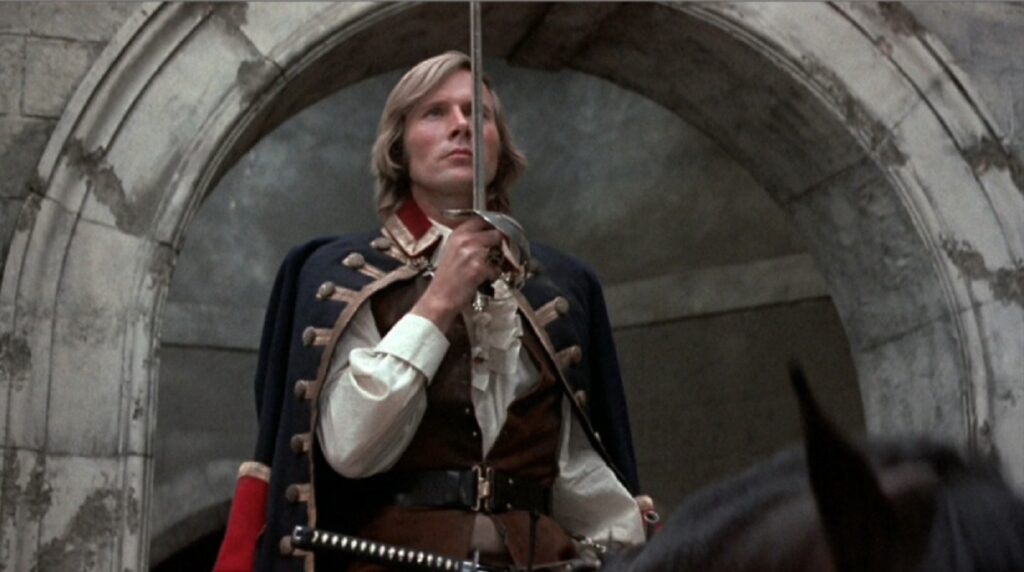
Almost impossible to see upon its minimal and belated release (two years after it was made), CAPTAIN KRONOS – VAMPIRE HUNTER offered a refreshing comic book spin on the Hammer vampire formula, opening up possibilities for a future direction that would never be realized. This was the brainchild of Brian Clemens, writer and associate producer of the AVENGERS TV series. While newly appointed Hammer head honcho Michael Carreras was attempting to get movies released while steering the company through a tumultuous and financially impoverished period in British film, Clemens was brought in as the screenwriter and co-producer of DR. JEKYLL AND SISTER HYDE (1972), a clever remix of the property they’d originally visited in 1960, with Ralph Bates and Martine Beswick taking the title roles. Clemens’ follow-up film, which he directed, was even better: an episode in the presumably ongoing adventures of a sword-wielding vampire slayer (Horst Janson) and his hunchbacked sidekick, Professor Hieronymus Grost (John Cater). The Gothic-romantic worldbuilding in this miniature marvel is wonderful, impressing upon us that there are many kinds of vampires in the world, and all must be slain in different ways. Caroline Munro and Shane Briant co-star.
10. FRANKENSTEIN AND THE MONSTER FROM HELL (1974)
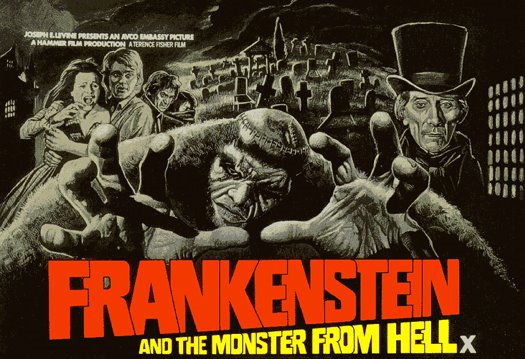
The final film of Hammer’s Frankenstein saga also feels like an elegy for the Hammer Gothic, sadly past its expiration date in a decade dominated by increasingly envelope-pushing horrors. (This was released the same year as the game-changing THE TEXAS CHAIN SAW MASSACRE, after all.) After spending years eluding authorities to carry out his experiments in secret laboratories, Cushing’s Baron Frankenstein is now reduced to continuing his work inside the walls of a prison while using an assumed name. He has a mute assistant (Madeline Smith from THE VAMPIRE LOVERS) and gains another helping hand with a young doctor (Shane Briant of CAPTAIN KRONOS and STRAIGHT ON TILL MORNING) imprisoned for the sort of activities for which Frankenstein was once prosecuted. Although the makeup for the monster (future Darth Vader David Prowse) is a bit silly, the somber, almost bittersweet mood of the film remains uninterrupted, thanks in no small part to the delicate touch of series mastermind Terence Fisher. The overall impression is of Hammer bidding farewell to one of its finest creations, righting the ship following 1970’s failed black comedy reboot HORROR OF FRANKENSTEIN (which lacked both Fisher and Cushing), and proving that they could still make a high-class horror film even on Hammer’s increasingly shoestring budgets. But don’t worry; there are still buckets of blood to spill before the credits roll.
Leave a Reply